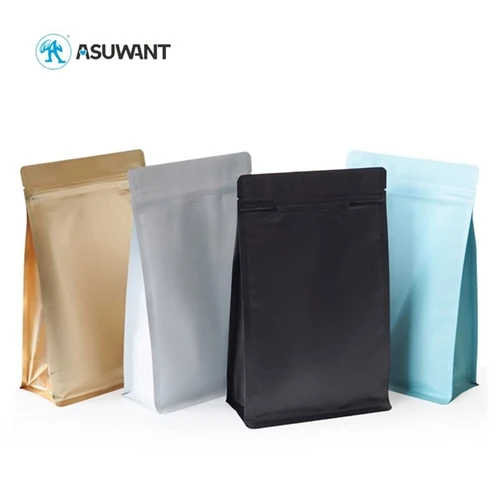

If you've ever shopped for snacks, cannabis edibles, or seed packets, you've almost certainly come across a side gusset bag-those flexible, self-standing pouches with folded sides that expand to hold more product, stand unassisted on shelves, and reseal to keep contents fresh longer. As a side gusset bag supplier, I'm often asked one question more than any other: "What's the actual cost of these bags?" It's not a simple number I can spit out over a quick message; the cost of side gusset bags depends on dozens of variables, from material choice and print runs to regulatory requirements and minimum order quantities. Let's break down the factors that shape this cost, share real-world examples of common pricing for our most popular pouches, and help you navigate how to get the best value without sacrificing quality.
First, let's start with the foundation of any side gusset bag: the materials you choose. Material is the single biggest cost driver, making up 50-70% of total pouch costs, because it's tailored to your product's needs. If you're packaging fresh roasted coffee, you need a barrier that keeps oxygen out and aroma in; if you're packaging a 3.5g cannabis edible, you need child-resistant, tamper-evident features that meet local regulatory rules. Here's how material type shifts costs, and why these choices matter for your bottom line.
Plastic laminates (the most common for durable, long-shelf-life products) are usually made of layers like PET (polyethylene terephthalate) for strength, aluminum foil for light and oxygen barrier, and LDPE (low-density polyethylene) for sealability. A basic clear plastic side gusset bag without any special features might cost $0.10 to $0.20 per unit for a 1oz size, but add foil barrier, and that jumps to $0.18 to $0.30 per unit for the same size. For products requiring food-grade certification (mandatory for all edible goods), that adds a small premium too-usually 2-5% of the material cost, because we have to source certified raw materials and test batches to ensure they meet FDA or EFSA standards.
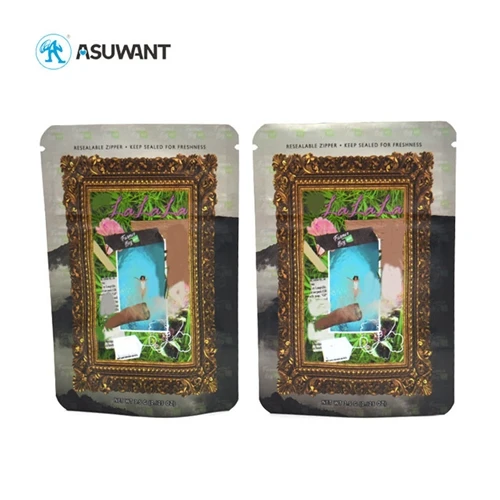
For cannabis packaging, which has strict state and country-specific laws about potency labeling, child-resistant closures, and odor barrier, materials get more specialized. Take our best-selling Cannabis Weed Packaging Stand Up Pouch 3.5g Edibe Bags: these are made with a thick, multi-layer mylar laminate that blocks 99% of light and odor, plus a Zilock resealable zipper that's easy for adults to open but hard for small children to manipulate. A pouch like this, sized for 3.5g of cannabis flower, typically ranges from $0.35 to $0.60 per unit, depending on print quality and order volume. The child-resistant feature alone adds about 10-15% to the base material cost, but it's non-negotiable for compliance in most legal markets. That same logic applies to seed packaging too, by the way: our Zilock Myalr Plastic Marajuana Thc Weed Flower Seeds Bags use nearly identical material specs but are often priced slightly lower, around $0.30 to $0.50 per unit, because they don't need cannabis-specific labeling elements like THC warnings.
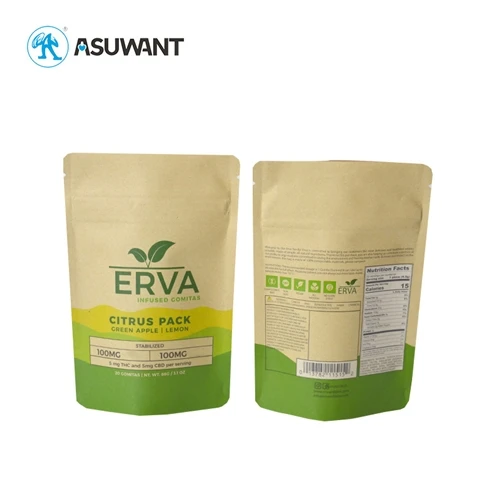
If you're packaging dry goods, snacks, or craft food, kraft paper side gusset bags are a popular, eco-friendly alternative. The Printed Kraft Paper Food Packaging Bag we offer is made with food-grade virgin kraft paper on the outside, paired with a thin PE or PLA (plant-based) liner inside for moisture and grease resistance. These bags are cheaper than high-barrier plastic laminates for many uses: a 1oz kraft side gusset bag with a basic print might be $0.08 to $0.15 per unit, while a larger 1lb bag with a premium matte print could be $0.25 to $0.45 per unit. The liner type makes a difference here too-switching from conventional PE to compostable PLA adds about 20% to material cost, but it's a great sell for brands targeting eco-conscious consumers.
Next up: print quality and run size, two factors that throw a lot of buyers off. Print is the second-largest cost component, and it's all about how many colors you use and how many bags you order. Side gusset bags are printed using flexography or digital printing, and each color you add costs more because it requires a separate printing plate. A plain, unprinted bag will be at the lower end of your cost range, but almost all brands need custom printing for branding, nutrition facts, or regulatory labels. For small runs (under 10,000 units), digital printing is usually more affordable because you don't have to pay for custom plates, but for larger runs (50,000+ units), flexographic printing is cheaper per bag because the plate cost is spread across more units.
Let's use a quick example to illustrate this. Suppose you want 20,000 custom 3.5g cannabis pouches with 4-color front printing: using our Cannabis Weed Packaging Stand Up Pouch 3.5g Edibe Bags as a baseline. If you go with digital print for that run, the total cost might be $5,500, or $0.275 per unit. But if you order 100,000 of the same pouch with flexo print, you'll pay $12,000 total, or $0.12 per unit-nearly half the per-unit cost, just because you doubled the order volume. That's why the "minimum order quantity (MOQ)" is such a key number for side gusset bags; most suppliers have MOQs starting at 5,000 units for digital print, but MOQs of 50,000 or 100,000 for flexo print, and those minimums directly tie to how much you pay per bag. Smaller businesses or startups often worry they can't hit high MOQs, but many suppliers (including us) offer flexible terms, like split print runs or partially custom bags, to keep costs manageable for smaller orders.
Another hidden cost that's easy to miss: custom features beyond printing and basic zippers. Side gusset bags can be tailored to do almost anything, but each add-on adds to the final price. Tamper-evident bands, valve openings for coffee (to release carbon dioxide without letting air in), die-cut handles for easy carrying, or window cutouts so customers can see your product all cost extra. For example, a standard side gusset bag costs $0.15 per unit, adding a one-way coffee valve adds $0.05 per unit, adding a tamper-evident band adds $0.03 per unit, so a fully customized bag with both features would be $0.23 per unit. These features aren't always necessary-coffee beans need valves, for instance, but a bag for granola doesn't-so make sure you only pay for what your product actually requires.
Regulatory compliance is another big cost that varies by industry. We touched on cannabis packaging earlier, but food packaging has its own set of rules. In the U.S., the FDA requires food packaging to be made of materials that don't leach harmful chemicals into food, which means we have to test every batch of kraft or plastic bags to confirm they meet those standards. For brands selling across state lines, that testing is non-negotiable, and it can add $0.02 to $0.05 per unit depending on the product type. For international buyers, compliance with EU, Canadian, or Australian regulations adds even more layers-some markets require specific labeling in multiple languages, or certifications for recyclability that add small material premiums.


Now, let's put all these factors together with real, current pricing for our most popular side gusset bags, so you can see how it works in practice. For a basic 1oz clear plastic side gusset bag, unprinted, no special features, MOQ 50,000: $0.11 per unit. For the same size, 4-color custom print, resealable zipper, MOQ 20,000: $0.22 per unit. For our Printed Kraft Paper Food Packaging Bag in 1lb size, 6-color custom print, compostable liner, MOQ 30,000: $0.38 per unit. For the Cannabis Weed Packaging Stand Up Pouch 3.5g Edibe Bags, 5-color custom print, child-resistant zipper, odor barrier, MOQ 50,000: $0.48 per unit. For seed packaging, our Zilock Myalr Plastic Marajuana Thc Weed Flower Seeds Bags, 4-color custom print, resealable zipper, MOQ 25,000: $0.32 per unit. These are all real numbers from our 2024 pricing guide, so you can see that cost isn't arbitrary-it's tied directly to the choices you make about your bag.
A common question I get is: "Can I get a cheaper bag?" The short answer is yes, but there are tradeoffs. If you go with a thinner, lower-grade plastic laminate, you'll pay less per unit, but the bag will tear more easily, lose its shape on shelves, or fail to keep your product fresh. For a coffee brand, a thin bag might leak aroma within a week, turning fresh-roasted beans stale before they reach customers. For a cannabis brand, a cheaper bag might not block odor, leading to compliance issues or product theft. The sweet spot for most buyers is balancing cost with functionality-prioritize the features your product actually needs, then adjust order volume or small details (like print colors) to bring costs down without cutting corners.
Another way to save: work with a supplier that offers design support and bulk discounts. Many side gusset bag suppliers will help you refine your design to use fewer colors, or suggest material alternatives that meet your needs at a lower cost. For example, if you're packaging a dry snack that doesn't need an ultra-high barrier, switching from a 5-layer foil laminate to a 3-layer clear laminate can cut material cost by 20% while still keeping your product fresh for six months. Bulk discounts are also standard-most suppliers will offer a 5-10% discount for orders over 50,000 units, and another 5% for orders over 100,000, so planning ahead and ordering in larger batches (if you have storage space) can save you a lot over time.
If you're not sure what kind of side gusset bag is right for your product, don't hesitate to reach out with your requirements. Whether you're looking for a food-safe kraft bag for granola, a child-resistant pouch for cannabis, or a durable bag for seeds, we can help you design a custom solution that fits your budget. Our team has worked with small startups and large national brands alike, so we understand that cost is a key factor for every buyer, and we're here to help you get the best value for your money.
Ready to discuss your specific needs for side gusset bags? Whether you have a rough order volume, product type, or design in mind, our team can provide a detailed, no-obligation quote tailored to you. We're here to answer all your questions about material, cost, lead times, and compliance, so you can make an informed decision for your brand.
References
- Flexible Packaging Association. (2023). "Side Gusset Bag Design and Performance Standards." Retrieved from industry resources at flexiblepackaging.org
- FDA. (2024). "Food Contact Substances: Safety Requirements for Packaging Materials." U.S. Food and Drug Administration
- National Cannabis Industry Association. (2023). "Cannabis Packaging Compliance Guidelines for U.S. Markets"
- Sustainable Packaging Coalition. (2024). "Eco-Friendly Flexible Packaging Material Specifications"