
When I first started working as a kraft paper bag supplier, I quickly noticed something that trips up a lot of new customers: measuring a kraft paper bag isn't just about guessing its size like you would with a tote from a store. There's a science to it, and if you get the measurements wrong, your bag won't fit your products right-whether you're packing snacks, retail goods, or something else entirely. Over the years, I've walked dozens of clients through the process, and today I want to break it down step by step, the way we teach it here at our shop.
First, let's get one thing straight: kraft paper bags come in all shapes and functions, so your measuring approach changes a little depending on what type of bag you're working with. For example, if you need airtight, resealable bags for storing food, our Ziplock Heat Sealable Food Storage Doypack is a go-to for many of our food industry clients. Doypacks stand flat on their own, so measuring them is different from a standard flat kraft paper bag you fold over at the top. Similarly, if you're packaging something like roast chicken, our Food Grade Zipper Pouch Roast Chicken Bag needs to be measured to account for the extra room you need for holding a whole cooked bird, plus sealing properly. Even though we're talking about kraft paper bags, it's helpful to note that measuring rigid packaging works a bit differently too-like if you're looking at boxes, but that's more for secondary packaging. For those, our Flip Folding Black Rigid Cardboard Magnetic Box has specific measurement rules, but today we're focusing on flexible kraft paper bags, which are our core product.
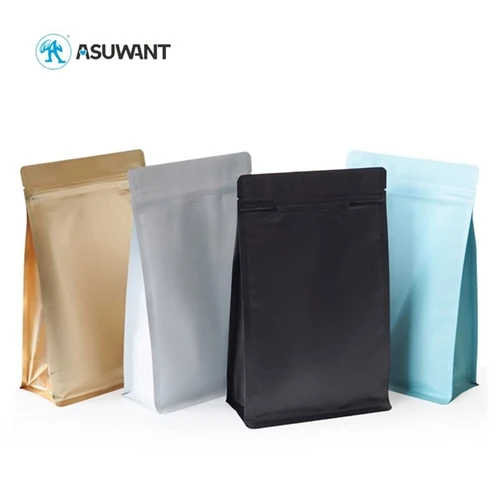
Let's start with the basics: the three key measurements for any kraft paper bag are length, width, and gusset. Wait, gusset-most first-time customers don't know what that is. The gusset is the folded side panel that lets the bag expand, right? If you've ever had a bag that looks flat when it's empty but puffs up when you fill it, that's the gusset doing its job. That third measurement is non-negotiable because if you skip it, your bag will be too narrow to fit your items.
Let's go through each measurement one by one, with tools you can use. You don't need anything fancy-just a soft measuring tape (the kind tailors use is perfect, because a rigid ruler won't bend around curved or flexible bag parts) and a flat surface. Don't use a hard ruler; it will give you incorrect numbers, especially for the gusset.
First, width. For a flat kraft paper bag (think a standard brown lunch bag), the width is the distance across the bottom of the bag when it's laid flat, not the top. Wait, that's another common mistake people make-they measure the opening of the bag as the width, but that's wrong. The width is the bottom panel, because that's what will sit on your counter or shelf. To measure width: lay your bag completely flat, open the bottom folds flat too so the gusset if visible. Run your measuring tape straight across the widest part of the bottom, from left edge to right edge, making sure you're pulling the tape taut but not stretching the paper (kraft paper has a little give, so don't yank it). Write that number down-this is your width.
Next, length. Length is the total height of the bag, from the bottom edge up to the top opening. Again, lay the bag flat, making sure the bottom is fully extended, no folds. Pull the measuring tape from the very bottom of the bag up to the very top of the opening, not including any handles if your bag has them. Wait, if your bag has handles, that's an extra measurement? Good question. If you need to carry heavy items, you'll want to account for handle length too, so your customer can reach the items easily without digging. But for the basic bag size, length is from bottom to top opening. One note: for doypack style bags like our Ziplock Heat Sealable Food Storage Doypack, the length might include the standing base, so you'll measure from the bottom of the flat base all the way to the top of the zipper seal, not including the resealable lip if it's extra. That's why testing with your product is always a good idea.
Then the gusset measurement. This is the make-or-break one for how much the bag can hold. The gusset is the folded side panel, and to measure it, you need to lay the bag flat, open the gusset folds like you're unfolding a piece of paper. The gusset measurement is how wide that fold is when it's opened fully. For example, if your bag can hold a 10-pound bag of flour, your gusset needs to be wide enough to fit that flour bag. A quick way to check: when you open the gusset, measure from the edge of the bag's main body to the farthest point of the folded side. That number is your gusset size. If you forget the gusset, your bag will be too narrow and stretch awkwardly when filled, or not close at all. I once had a bakery client who ordered bags without accounting for the gusset, and their bread bags couldn't fit a full loaf-they had to reorder, which cost them time and money. That's a mistake I always warn new suppliers and customers about.
Now, let's talk about specific types of kraft paper bags, because measuring changes a little depending on the use case. If you're using doypacks (like our Ziplock Heat Sealable Food Storage Doypack), these bags stand upright on their own, so your length measurement should include the base that helps it stand. Don't measure the overall collapsed height-measure the height when the bag is fully expanded, because that's how much space you have inside. For the food grade zipper pouches like our Food Grade Zipper Pouch Roast Chicken Bag, gusset is extra important because you need room for the chicken to fit without crumpling. Roast chicken can be bulky, so adding an extra 1-2 inches to the gusset measurement than you think you need is a good rule of thumb. You also want to make sure the length leaves enough space at the top to seal the bag properly without squishing the chicken or leaving too much empty space that lets air in (which is bad for food storage).
Another thing to consider is the difference between nominal size and actual size. When we list a bag as 10x15x5 inches, that's the nominal size, which is the approximate internal capacity. But kraft paper can have a small amount of shrinkage during manufacturing, so it's good to add a 1/8 inch buffer if you're ordering a tight fit. Never order a bag that's exactly the size of your product-always leave a little room. For example, if your product is 9 inches wide, order a bag that's 9.25 inches wide, so you don't have to force the product in and risk tearing the paper.
What about testing the fit? The best way to make sure you've measured correctly is to test with your actual product, not a substitute. If you're packaging granola bars, use a granola bar that's the exact size you'll be packing. Insert it into the bag, then check three things: does it slide in easily without stretching the paper? Is there at least 1 inch of space at the top of the bag to seal it (or for the zipper on resealable bags)? Is the gusset expanded enough that the bag doesn't feel tight or lopsided? If all those check out, your measurements are right. If not, adjust your gusset or length accordingly. A lot of my regular clients will order a sample of the bag they need first, test it with their product, then place a bulk order. That's a smart move, because it saves everyone time and money in the long run.
I also get asked a lot about measuring bags with handles. If your bag has paper handles, you'll need two extra measurements: handle length and handle spacing. Handle length is the distance from where the handle attaches to the bag to the end of the handle, so customers can hold the bag comfortably without hitting the contents. Handle spacing is the distance between the two handle attachments on the top of the bag, so it lines up with the center of the bag and stays balanced when filled. Too much space between handles and the bag will tilt to one side; too little and it might dig into hands. For heavy items, we recommend handle length of at least 8 inches to make carrying easier.
Let's clear up a common confusion about bag dimensions: some suppliers list "flat size" and "filled size." Flat size is when the bag is empty and collapsed, which is what you measure when you lay it flat. Filled size is how big it gets when you put items inside, which is determined by the gusset and length. Always ask a supplier for both sizes, so you know exactly how much space you'll have when the bag is full. For example, a flat size of 10x5x12 inches might expand to a filled size of 10x8x12 inches, depending on the gusset flexibility. Don't assume the flat size is the filled size-kraft paper has some stretch, but not enough to go from 5 inch gusset to 8 inch gusset on its own. That's why the gusset measurement is critical.
One more tip: if you're ordering custom printed kraft paper bags, you'll also need to account for a small margin on the edges for printing. Most printers need a 1/4 inch bleed around the bag, so when you give them your design files, leave extra space on the sides and top so nothing gets cut off during printing. That's not a measuring mistake for the bag size itself, but it's a related detail that prevents frustration later.
Now, if you're still unsure about measurements, don't guess-reach out to your kraft paper bag supplier. A good supplier will have a team that can walk you through the measuring process, answer questions, and even send a sample so you can test with your product. At our company, we've helped hundreds of clients get their measurements right, from small bakeries to large food distribution companies. We know that the right bag size makes all the difference in protecting your products, making your brand look professional, and keeping customers happy.


If you're looking for high-quality kraft paper bags, resealable food storage bags, or custom packaging for any product, don't hesitate to reach out to us to discuss your needs. We can provide samples, help you calculate the perfect measurements for your application, and give you a quote tailored to your order. Whether you need the Ziplock Heat Sealable Food Storage Doypack for snacks, the Food Grade Zipper Pouch Roast Chicken Bag for takeout, or custom kraft paper bags for retail, we're here to help you get it right.
References
- Kraft Paper Packaging Association. (2022). Best Practices for Measuring Flexible Paper Bags. Retrieved from kraftpaperpack.org/measuring-guidelines
- Food and Drug Administration. (2021). Food Grade Packaging Standards for Resealable Pouches. Retrieved from fda.gov/food-packaging-guidance
- Retail Packaging Association. (2023). Sizing Guidelines for Custom Paper Bags. Retrieved from retailpackaging.org/bag-sizing