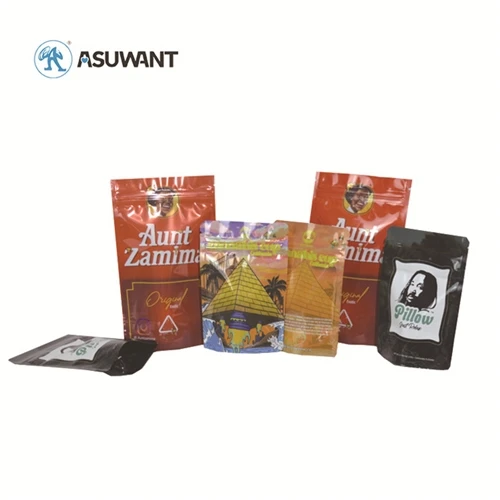
With increasingly stringent global environmental policies and the popularization of green consumption concepts, more and more overseas buyers pay close attention to the environmental protection attributes and ecological impact of packaging products. Plastic packaging bags are widely used in various industries due to their practicality and cost performance. However, improper use and waste disposal will bring multiple environmental burdens. Today, we will sort out the main environmental impacts of plastic packaging bags to help foreign trade customers operate compliantly and deploy the green packaging market.
1. Long Degradation Cycle & Long-term Solid Waste Pollution
Ordinary plastic packaging bags are non-degradable with a natural degradation cycle of hundreds of years. They cannot decompose naturally like paper or degradable materials. A large number of waste plastic bags buried in landfills occupy land resources permanently. They form an impermeable and airtight barrier in the soil, destroying soil structure, hindering water infiltration and plant root growth, and causing soil compaction and ecological degradation.
2. Threat to Wildlife & Biodiversity Loss
Lightweight plastic bags are easily blown by wind into rivers, oceans and forests. Marine creatures often mistake plastic bags for food, leading to intestinal blockage, malnutrition and death. They also easily entangle aquatic organisms and birds, restricting their movement and foraging ability. Every year, countless marine animals die from plastic waste, causing severe damage to global biodiversity.
3. Microplastic Pollution & Ecological Cycle Contamination
Under long-term exposure to sunlight, wind and water erosion, waste plastic bags break down into tiny microplastic particles. These hard-to-remove particles widely exist in soil, water and atmosphere. They enter the food chain through crops and aquatic organisms, accumulate gradually, and eventually affect the ecological system and human health, causing sustainable cyclic pollution.
4. Resource Consumption & Carbon Emission Issues
Plastic packaging bags are made from non-renewable fossil resources such as petroleum and natural gas. Mass production continuously consumes scarce natural resources. Meanwhile, the production, processing and incineration of waste plastic bags release a large amount of greenhouse gases and harmful pollutants, aggravating global warming and air pollution. This is the core reason why many countries have issued plastic restriction and ban policies.
5. Cross-border Environmental Compliance Risks
At present, most foreign trade markets including Europe, America and Southeast Asia have implemented strict plastic control regulations, with strict restrictions on the use, import and export, and recycling standards of single-use plastic packaging. Ordinary plastic bags that fail to meet local environmental standards may face customs detention, fines and product removal, bringing unnecessary economic losses and brand damage to foreign trade enterprises.
Environmental upgrading is an inevitable trend in the foreign trade packaging industry. We focus on green packaging customization and provide sustainable solutions such as degradable packaging, lightweight reduced packaging and recyclable composite packaging according to local environmental regulations. We balance product quality, practicality and environmental protection, helping customers adapt to global green policies and enhance brand core competitiveness.


Asuwant Plastic Packaging Co., Ltd. is a professional packaging bags and paper boxes manufacturer. ASUWANT main products are Food packaging bags, Child-resistant bags, Mylar bags, Coffee bags, Kraft paper bags, Pet food bags, different kinds of packaging bags and paper boxes , glass bottles.
ASUWANT products are mainly exported to United states,Canada, France, Italy, Japan ,Australia,Middle East and 20 other countries and regions.We are QS.SO9001 BRC SEDEX .FSC GRS certificated. Contact us>>>