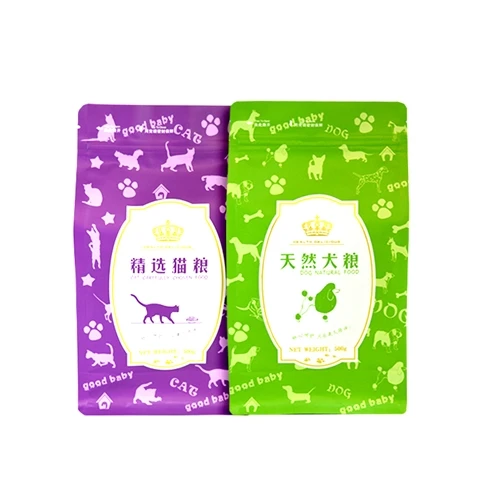
Biodegradable material
Concept: Degradable materials refer to adding some additives to promote their degradation function, or synthesizing materials with degradable properties, or materials made from renewable natural raw materials, which can meet the original application during the use and storage period Performance requirements, and after use, under certain environmental conditions, the chemical structure can change significantly within a short period of time, which causes the loss of certain properties.
Classification: At present, according to the objective conditions or mechanisms that cause degradation, degradable materials can be roughly divided into: biodegradable materials, photodegradable materials, oxidatively degradable materials. Hydrolytically degraded materials. Environmentally degradable materials and destructive biodegradable materials, etc. They can be combined with each other into degradable materials with better performance, such as light/biodegradable materials.
1 Biodegradable materials Biodegradable materials synthesized by microorganisms, referred to as biomaterials, including biopolyester, biocellulose, polysaccharides and polyamino acids, are a class of materials that can be completely degraded by microorganisms in nature. The animal and vegetable fats or glycogen stored in the microorganisms are a type of aliphatic polyester, called biopolyester, which is a nutrient substance for microorganisms. When there is no carbon source, these polyesters can be decomposed into acetyl coenzymes as energy for life activities.
Polylactic acid (PLA), also known as polylactide, is chemically synthesized using lactic acid, a product of microbial fermentation, as a monomer. It can automatically degrade after use and will not pollute the environment. Polylactic acid can be processed into fibers and films with excellent mechanical properties, and its strength is roughly equivalent to nylon fibers and polyester fibers. Polylactic acid can be hydrolyzed into lactic acid and acetic acid in the body, and metabolized into CO2 and H2O by enzymes, so it can be used as a medical material. Japan and the United States have used polylactic acid materials to process surgical sutures, artificial bones, and artificial skins. Polylactic acid is also used in the production of packaging containers, agricultural mulch , fiber sportswear and bedding.
Photodegradable materials
Photodegradable materials refer to materials that can be degraded under the action of light. .
Examples of photo-degradable materials: According to the manufacturing method, photo-degradable materials can be divided into synthetic degradable materials and additive degradable materials.
(1) Synthetic degradable material a ethylene/carbon monoxide copolymer (E/CO) photodegradation is characterized by main chain scission. The photodegradation speed and degree of E/CO are related to the amount of ketone groups contained in the chain. The higher the content, the faster the degradation speed and the greater the degree. Scientists in Texas, USA have conducted outdoor exposure experiments on E/CO. In June when the sun is full, E/CO can be degraded within a few days at the earliest. B. Vinyl/vinyl ketone copolymer (Ecolyte) The ketone group on the side chain of the Ecolyte molecule can be decomposed under the action of natural light. Ecolyte's photodegradation performance is better than E/CO, but the cost is also higher. The disadvantage of this type of polymer is that it starts to degrade once it is exposed to light, and there is almost no induction period. Antioxidants need to be added to adjust the induction period.
(2) Additive photodegradable materials
Additive photodegradable material is to add a small amount of photosensitizer to the polymer. At low concentration, it is a photooxidation degradation catalyst, which reacts by sunlight (ultraviolet light) irradiation to break the polyolefin polymer. Adding ketones, amines and other photosensitizers to PE, PP and other polymers can achieve better photodegradability.
The characteristics of this type of polymer: the cost of additive photodegradable materials is low, the production process is simple, and the effect of covering mulch is better. However, its degradation characteristics are that the exposed surface is relatively completely degraded, and the part buried in the soil is poorly degraded. The degradation induction period of such photodegradable materials can be controlled at more than two months. But the controllability of degradation time is poor.
Oxidative degradation materials: a class of materials that are degraded by oxidation;
Hydrolytic degradation materials: a class of materials degraded by hydrolysis;
Environmentally degradable materials: A class of materials that are degraded by the combined action of light, heat, water, oxygen, pollutants, microorganisms, insects, wind, sand, rain, etc. and mechanical forces when exposed to environmental conditions. They are degradable materials. Collectively.
Destructive biodegradable materials: Currently, destructive biodegradable materials mainly include starch modified (or filled) polyethylene PE, polypropylene PP, polyvinyl chloride PVC, polystyrene PS, etc.
Development prospects: The research and use of degradable packaging materials are developing rapidly. As energy prices rise and environmental problems become increasingly prominent, the replacement of traditional petroleum products by degradable materials worldwide is showing a gradual acceleration. The government is expected to increase Corresponding preferential policies and laws and regulations have been issued to encourage market applications. The prospects for large-scale applications of degradable materials are optimistic.